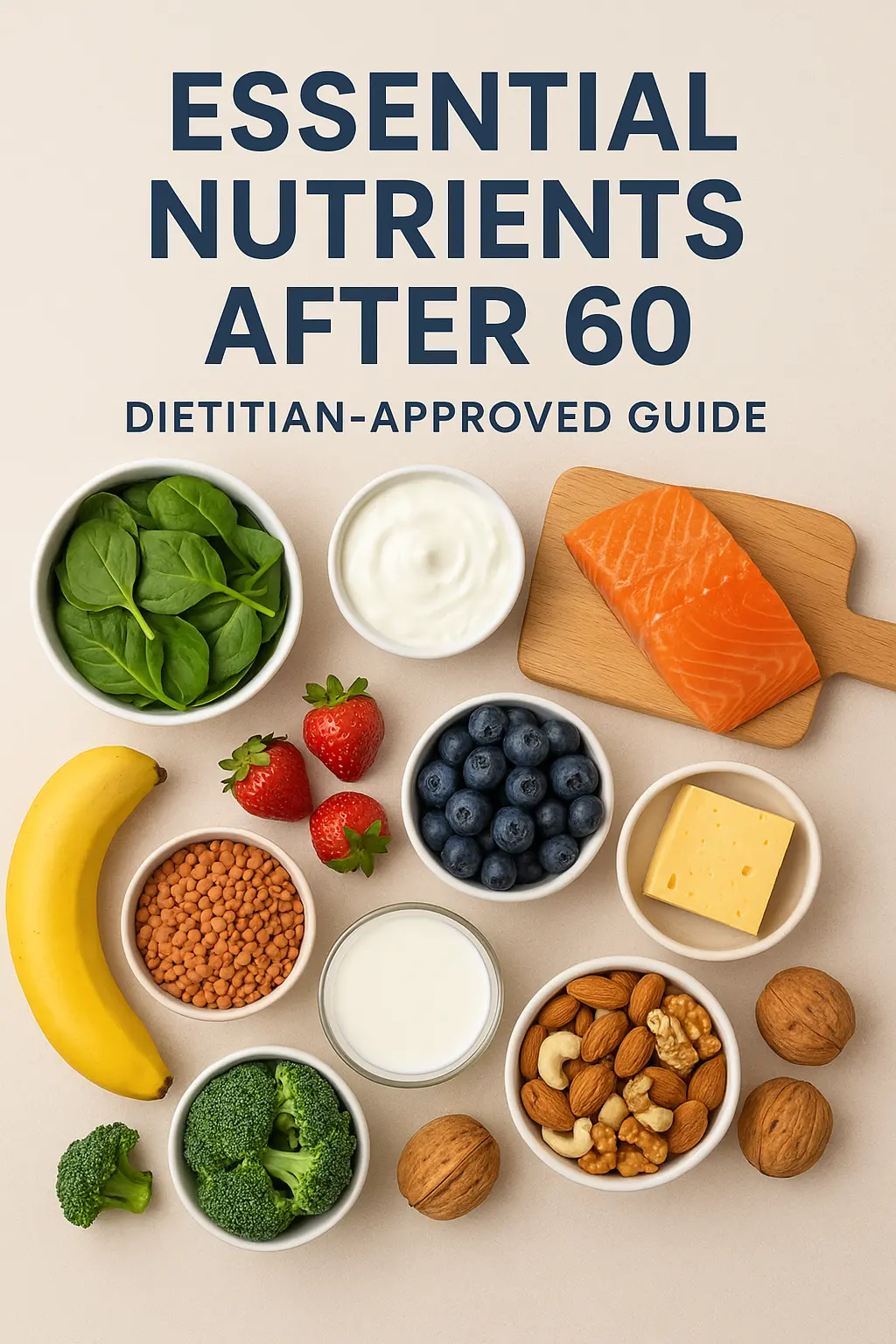
As we age, our bodies undergo changes that affect nutrient absorption, metabolism, and overall health. Maintaining optimal nutrition after 60 is critical for bone health, cognitive function, heart health, and immune resilience.
Key Nutrients to Prioritize
- Protein (1–1.2g per kg of body weight daily): preserves muscle mass and strength — lean meats, fish, lentils, chickpeas, and Greek yogurt are strong sources. Pairing protein with resistance training helps reduce muscle loss after 60.
- Calcium (1,200mg daily): protects bone density and helps prevent osteoporosis — dairy, leafy greens, and fortified foods are good sources. Pair with vitamin D for better absorption.
- Vitamin D (800–1,000 IU daily): supports calcium absorption and immune function — from sunlight, fatty fish, and fortified foods.
- Vitamin B12 (2.4mcg daily): supports nerve health and red blood cells — absorption naturally decreases with age, so monitor levels with your doctor.
- Omega-3 fatty acids (250–500mg EPA/DHA daily): support heart and brain health — fatty fish, flaxseeds, chia seeds, and walnuts are good sources.
- Fiber (25–30g daily): supports digestion and helps regulate cholesterol and blood sugar — whole grains, fruits, vegetables, and legumes.
- Magnesium (320–420mg daily): supports muscle, nerve, and bone health — nuts, seeds, whole grains, and leafy greens.
- Potassium (2,600–3,400mg daily): helps balance blood pressure — bananas, oranges, avocados, and leafy greens.
- Antioxidants (vitamins C, E, selenium): neutralize free radicals — citrus fruits, nuts, seeds, and Brazil nuts.
- Water (8–10 cups daily): critical for digestion, joint health, and kidney function.
Practical Tips to Optimize Nutrition After 60
- Incorporate nutrient-dense foods in every meal
- Aim for a balanced plate: half vegetables and fruits, one-quarter protein, one-quarter whole grains
- Use supplements only if dietary intake is insufficient, or as advised by a healthcare provider
- Get periodic blood tests to track vitamin D, B12, and other key nutrients
- Combine nutrient-rich eating with exercise, sunlight exposure, and stress management
The Bottom Line
A well-balanced diet after 60 isn't just about calories — it's about quality nutrition that supports bone density, muscle strength, heart health, cognitive function, and immune resilience. Review your diet, consider consulting a dietitian, and start incorporating these nutrients to thrive in your golden years.
This article is for general informational purposes and isn't a substitute for advice from a qualified healthcare provider or registered dietitian.
Check your daily calorie needs
See how your needs may have shifted with age.